Originally Published as: Up On the Roof: Environmental elements can alter roofing safety in a matter of minutes
It’s very early morning, and a roofing crew foreman is checking the weather forecast. Good, it looks like clear skies and mild temperatures with little wind. The foreman heads out to the jobsite to get the crew started on a roofing job. That is not the end of the precautions needed, though. The workplace changes as the sun rises, clouds move in, humidity climbs, and wind picks up or shifts direction. A roof that offered solid footing at 10 a.m. may be dangerously hot, wet or contaminated by early afternoon. Weather can also affect a worker’s balance and judgment, turn a metal panel into a sail, loosen temporary coverings, and scatter materials that were secure only minutes before.
Todd Meinhold, owner of Ridgeline Safety Systems, H&D Quality Builders and Cool Roofs, said crews need to evaluate conditions throughout the day and prepare for the worst likely change, not simply the weather they see when work begins.
“Prep is paramount,” Meinhold said. “Always plan for the worst-case scenario.”
Heat, Humidity, and Solar Exposure
Air temperature tells only part of the story. Humidity, direct sun, wind, physical exertion, clothing, and the heat absorbed or reflected by the roof all contribute to a worker’s total heat load. OSHA notes that weather reports and heat-index readings are generally based on shaded conditions; direct sunlight can make conditions feel substantially hotter, while a heat-absorbing roof adds a source the forecast cannot measure.
On metal roofing, contact burns are another concern. Meinhold compared touching sun-heated metal roofing with touching a hot curling iron. Dark finishes without “cool roof” coatings can become especially hot, but highly reflective surfaces can also redirect solar energy toward a worker. Gloves must provide suitable grip and thermal protection for the material being handled. Long pants and light, breathable long sleeves can help protect skin without adding unnecessary heat burden.
Heat illness may first appear as changes in coordination, balance or behavior, which are particularly dangerous at elevation. A co-worker may notice trouble before the affected person does. Meinhold said co-workers should watch for loss of balance, unusual fatigue, confusion, cessation of sweating or shivering in the heat. OSHA advises moving a symptomatic worker to a cooler place and beginning active cooling. Possible heat stroke is an emergency requiring immediate medical help.
There is no universal temperature at which every roofing crew must stop work. A humid, still 70-degree day can challenge a worker differently than a hotter day with air movement. The working plan should account for workload, acclimatization, sun exposure, roof temperature and PPE. Periodic water, rest, and shade are the foundation, but schedules may also need to shift. In hot climates, crews may start earlier, pause during the worst afternoon heat, and return later when conditions permit.
Dew, Condensation, Rain, and Wet Surfaces
A clear forecast does not guarantee a dry roof. Dew can form as roof surfaces cool overnight, particularly when humid air is present. Condensation, mist and light rain may be difficult to see on smooth metal, membranes, and underlayments. Water can reduce friction and conceal dust, pollen, loose fasteners, or wrinkles beneath a worker’s boot.
Meinhold’s crews wait for the sun to burn off dew rather than treating the first hours of daylight as automatically workable. After rain they reassess both the walking surface and what lies beneath the finished roof. Synthetic underlayments and high-temperature self-adhered membranes vary in surface texture and installation requirements, so crews should follow the manufacturer’s instructions and not assume all products provide the same traction.
Rain also changes the consequences of an incomplete roof. Before a storm open penetrations must be covered and underlayment, tools, panels and trim bundles secured. When crews return a competent person should inspect temporary coverings, staples, and fasteners before the rest of the crew resumes work. Loose paper, a raised edge, or a screw dropped from a pocket can become the first link in a fall.
Wind, Gusts, and Changing Direction
Wind is one of the most complex roofing hazards because it acts on workers, access equipment, and materials at the same time. Long metal panels have a large surface area and can behave like sails. The hazard increases with panel length, building height, roof geometry, handling position, and gust direction. Conditions at roof level may be stronger and less predictable than conditions on the ground.
Meinhold recommends watching tree movement, cloud cover, and the direction of the wind, but observation should supplement rather than replace a reliable forecast and on-site measurement when appropriate. A crew must also consider whether it can control the particular panel being lifted. A short sheet carried eight feet above the ground presents a different exposure than a 40-foot panel being handled at the eave of a two-story building.
On one airport reroof, wind rose while Meinhold’s crew was handling 40-foot sheets. The experienced foreman increased the number of workers assigned to each panel, then proceeded cautiously. The incident illustrates the judgment required, but it does not establish a universal formula. More hands do not automatically make a lift safe. If gusts prevent workers from maintaining control or safe footing, the lift and the roofing work must stop.
“Less is more,” Meinhold said. “Don’t risk anyone’s life to get two more pieces on. I’d rather see my crew show up for work the next day.”
Severe Storms and Lightning
Thunderstorms can bring wind shifts, lightning, hail, and intense rain with little warning. A weather app is useful only if someone is responsible for monitoring it and the crew plans accordingly. Emergency plans should identify the person authorized to stop work, the route off each roof area, the location of safe shelter, how materials will be secured, and how an injured or suspended worker will be rescued.
Workers should not wait until the roof becomes unmanageable to descend. The National Oceanic and Atmospheric Administration (NOAA) advises going indoors when thunder is heard; no outdoor location is safe during a thunderstorm. A substantial, enclosed building or hard-topped vehicle is preferable to sheds, open structures, or remaining on an exposed roof. Crews should follow current lightning guidance and re-inspect the work area after the storm.
Cold, Frost, Ice, and Snow
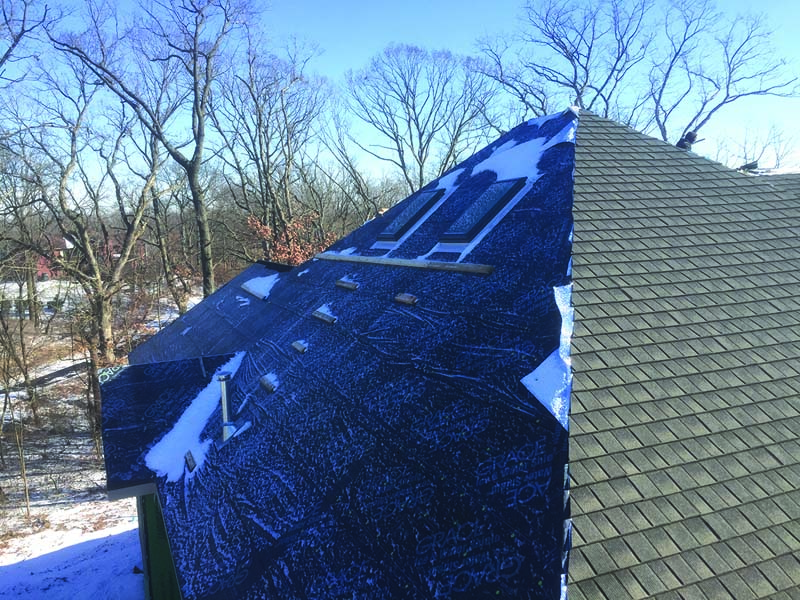
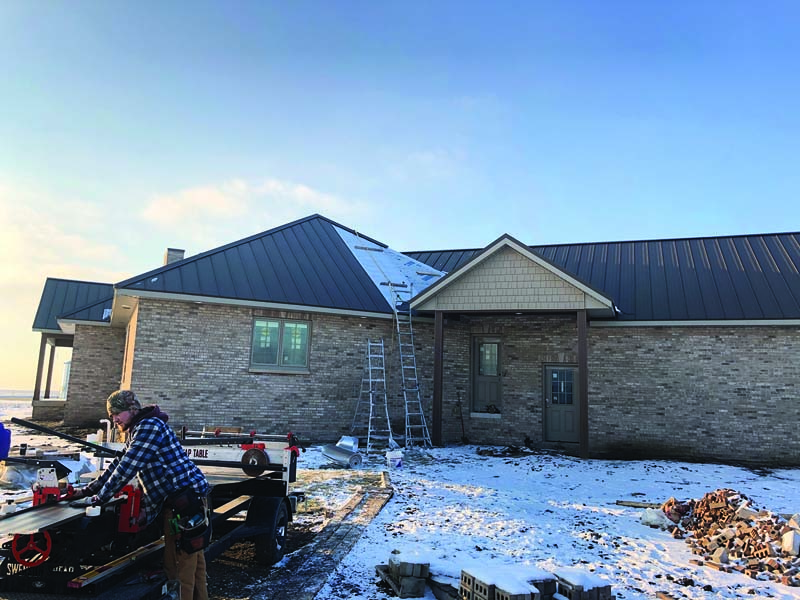
Winter weather combines traction problems with cold stress, reduced dexterity, and hidden conditions. Frost and thin ice can be nearly invisible, particularly on light-colored or reflective roofs. Snow can hide skylights, penetrations, roof edges, loose material, and variations in elevation. Gloves and bulky clothing may reduce dexterity or interfere with harness fit if the PPE system was not selected and adjusted for cold-weather use.
Meinhold tends to schedule stone-coated metal work during winter months because its factory-applied granules can provide more traction than smooth metal, and in his experience, sometimes it’s more traction than the asphalt roof beneath it. That relative advantage does not make the surface slip-proof. Snow still must be removed without creating new hazards, fall protection remains necessary, and changing temperatures can produce meltwater that refreezes.
If snow is expected Meinhold may tarp an area in advance, building the additional labor and cost into the job. His crews also use leaf blowers for light snow removal where conditions and site rules allow. Any removal method must avoid obscuring hazards with snow or damaging the roof surface.
Dust, Pollen, Smoke, and Air Quality
Not every weather-related hazard falls from the sky. Wind carries agricultural dust, pollen, wildfire smoke, sawdust, and debris from nearby trades. Dry particles can act like small bearings beneath a boot on smooth metal. Rain or dew may turn the same material into a paste that changes traction again. Pine needles, leaves, and granules can also accumulate in valleys or behind equipment.
Meinhold has seen seasonal tilling dust and corn pollen affect roofs in agricultural areas, while wildfire smoke has forced contractors to pay closer attention to air quality and scheduling. Employers can use the EPA AirNow Air Quality Index and local advisories to plan work. Where wildfire smoke or another airborne hazard is present, the response may include rescheduling, moving work to a period with cleaner air, reducing exertion by enforcing extra breaks, providing filtered indoor recovery space, or implementing a respiratory-protection program when required. A disposable mask handed out without hazard assessment, proper selection, and training is not sufficient.
Glare, Low Light, and Rapid Visibility Changes
Bright sun reflecting from metal can make seams, edges, and surface contamination harder to see. Low sun angles can create glare in the morning and late afternoon, while clouds, smoke, fog, and early darkness can reduce contrast. Tinted eye protection may help in bright conditions, but lenses must still allow workers to see footing and transitions when the light changes. Work lighting should illuminate the task when needed without creating new glare or adding cords or trip hazards.
The Roof Assembly Changes the Risk
Material and installation sequence affect how long a roof remains exposed and where workers must travel. Smooth standing seam, exposed-fastener panels, stone-coated metal, asphalt shingles, and different underlayments do not offer identical traction. Metal panel systems may also have installation patterns that limit where a crew can begin and how quickly both sides or multiple planes can be dried. A method that works on asphalt cannot automatically be transferred to metal.
Temporary traction aids must be compatible with the roof and used only as intended. Roofers have used ridge-hook ladders, carpet remnants, or protective bubble-foil material where appropriate to provide access or prevent scratching. Magnetic roofing footwear and high-traction shoes may improve grip on compatible steel surfaces, but they are not fall-protection systems and can create false confidence. Workers must remain connected to a properly designed fall-protection system as required.
Secure the Site Before Leaving
A storm plan must cover the ground as well as the roof. Meinhold secures stacked metal with ratchet straps or another suitable restraint and secures tools, trim bundles, and loose products before detrimental weather is expected to arrive. Materials should be staged according to manufacturer requirements and restrained against anticipated wind without creating sharp-edge, crushing, or trip hazards.
After any weather event, the first person back on the roof should be fall-protected and assigned to inspect the roof. That inspection should look for displaced underlayment, raised fasteners, pooled water, windblown debris, damaged anchors and lifelines, shifted ladders, unsecured openings, and material deposited by other trades.
Conditions can change while the roofer is working. Meinhold recalled sawdust from OSB cutting scattering across a roof and then being carried away by the wind. The lesson: Keep looking for possible danger.
Safety Depends on Company Culture
Written rules matter, but crews take their strongest cue from what supervisors reward. The fast, determined employee who always wants to finish one more section can be valuable, Meinhold said, but that personality needs a couple of things — an understanding of who has the authority to stop work and a company culture that places safety ahead of production.
Contractors should begin with OSHA requirements, manufacturer instructions and recognized industry best practices, then tailor a written plan to the company’s climate, crews, roof systems, and typical projects. Coastal wind, Midwest frost, mountain sun, and tropical afternoon heat call for different operating details. The standard should identify who monitors conditions, how hazards are measured, when work pauses, who inspects after a change, and how workers report a concern without being pressured to continue work.
“You don’t know what you don’t know,” Meinhold said. “First have knowledge of industry best practices; then tailor them to your environment and your company.”
Resources
- AirNow, https://www.airnow.gov/wildfires/
- National Institute for Occupational Safety and Health, https://www.cdc.gov/niosh/cold-stress/about/
- Occupational Safety and Health Administration, https://www.osha.gov/heat-exposure
- National Weather Service, https://www.weather.gov/safety/lightning
- Ridgeline Safety Systems, https://ridgelinesafety.com/
- U.S. Environmental Protection Agency, https://www.epa.gov