Originally Published as: Solar Attachments: Choose the Right Approach for Your Roof System
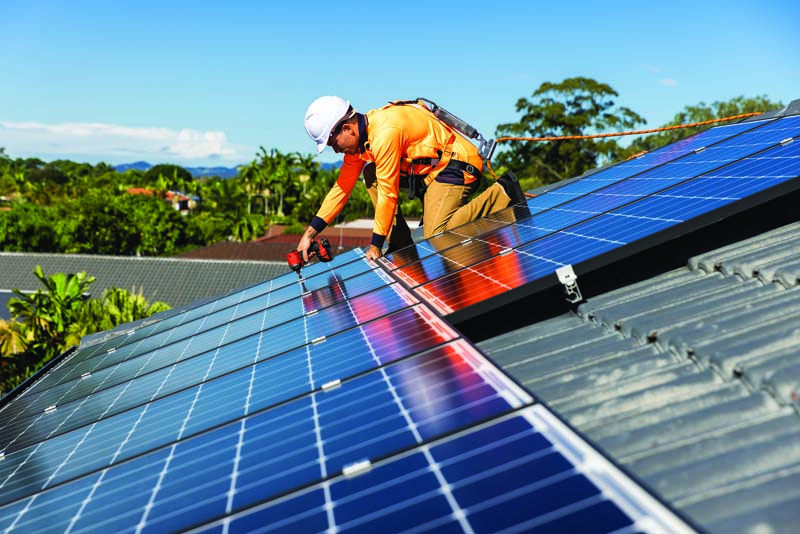
Solar installations are becoming a more frequent component of roofing projects. Whether for a retrofit or new construction, roofers are increasingly expected to understand not just how to install a roof, but how to integrate a solar array without compromising performance. While panels and inverters tend to get the attention, the attachment method is a big part of what determines long-term success. Every attachment decision affects three critical areas: how loads are transferred, how water is managed, and how the roof system accommodates movement.
For roofers working across multiple roof types—asphalt shingles, metal, single-ply, tile, and others—the challenge is choosing an attachment strategy that works with the roof rather than against it. At a basic level, solar attachment is about creating a reliable load path into the structure, maintaining the roof’s ability to shed water, and allowing the system to perform as designed over time.
The Load Path
Every solar array adds weight and introduces wind uplift forces, and those forces must be transferred through the attachment system into the building structure in a predictable way. On most roof types, this means anchoring into rafters, trusses, or structural decking rather than relying on the roofing material alone.
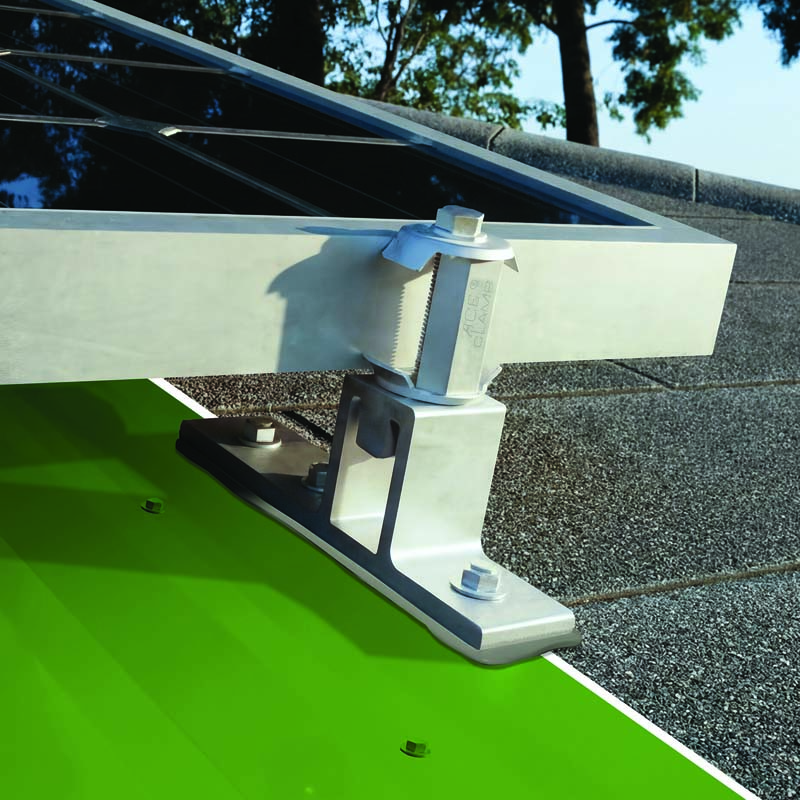
Mary Jean Wasley of AceClamp emphasizes the importance of a consistent load path that does not introduce new failure points into the roof system. Different roof systems approach this differently. Asphalt shingle and single-ply systems (TPO, PVC, or EPDM) and through-fastened metal roofs typically rely on flashed, through-fastened mounts secured into framing members, while tile roofs often use stand off systems or replacement tiles designed to bridge above the roof surface. Other metal roofs, particularly standing seam profiles, may allow for clamp-based systems that avoid penetrations entirely.
Penetrating vs. Non-Penetrating Systems
Most roof types require solar array attachment types that rely on roof penetrations. When properly detailed, those penetrations can be durable and watertight. Asphalt, single-ply, and tile systems, as well as through-fastened metal roofing all depend on flashed mounts that tie into the structure below, but the effectiveness of those mounts depends heavily on how well they are integrated into the roofing system.
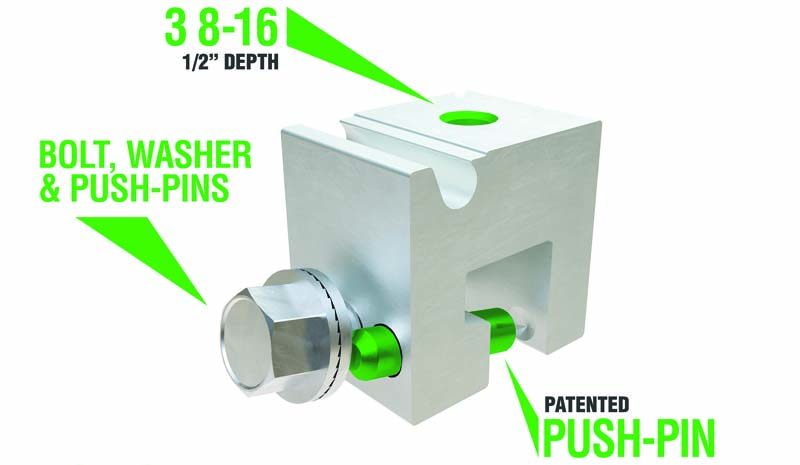
Standing seam metal roofs are a notable exception, as certain profiles can accommodate clamp systems that attach directly to the seams without penetrating the panel surface. These systems rely on mechanical engagement with the seam and must be matched to the specific panel profile to perform as intended. Some clamps, like those from AceClamp, are adjustable for various standing seam profiles. Self-locking technology is not only labor saving but also enables clamps to withstand high winds, vibrations and thermal expansion of roof panels.
Flashing and Sealant
Even when penetrations are required, the long-term success of the installation depends far more on flashing than on sealant. Across all roof types, a reliable installation follows a layered approach in which the underlayment provides backup protection, flashing directs water away from the penetration, and sealant acts only as a secondary safeguard. Don Peronace of AceClamp points out that relying on sealant as the primary defense is one of the most common causes of failure. On asphalt shingle roofs, integrating flashed mounts with the shingle courses so water is directed around the penetration is best practice. On single-ply systems, it may involve welded or mechanically attached flashing components designed specifically for the membrane type. Tile systems require careful detailing to preserve drainage paths beneath the tiles while still securing the attachment to the structure below.
Rail vs. Rail-Less
Another key decision in choosing your solar array attachment system is whether to use a railed or rail-less system. Railed systems use horizontal rails attached to the roof, providing flexibility in panel layout and making it easier to accommodate irregularities in the roof surface. This flexibility can simplify installation but comes with the tradeoff of additional components, added weight, and more attachment points. Rail-less systems attach panels directly to mounting hardware, reducing material and often improving installation efficiency when conditions are predictable. The choice between these systems typically comes down to how much adjustability is needed in the field versus how much simplicity and speed are desired during installation.
Accounting for Movement
Movement is another factor that cannot be overlooked. All roofing systems experience some degree of movement, whether from thermal expansion, structural loading, or environmental conditions. Metal roofs, in particular, can expand and contract significantly, while single-ply membranes can flex and shift. Solar arrays, however, are relatively rigid, which means the attachment system must accommodate differences in movement between the roof and the array. Attachment systems should not restrict the natural movement of the roof. On standing seam systems, properly designed clamp attachments can secure the array without locking the panel in place, while on other roof types, careful spacing and hardware selection help reduce stress at connection points.
Material Compatibility Matters
Material compatibility also plays a critical role in long-term performance. Solar mounting systems often combine aluminum rails, steel fasteners, coated panels, and various flashing materials, and if those components are not compatible, galvanic corrosion can develop over time according to Wasley. This is particularly important on metal roofs but is also relevant for fasteners and flashing used on other systems. It is important to use components designed to work together, especially in environments where moisture, salt air, or agricultural conditions can accelerate corrosion.
Common Installation Pitfalls
Despite the variety of systems available, many installation issues trace back to a relatively small number of common mistakes. Attachments that miss structural members or rely on decking alone can compromise load transfer. Over-reliance on sealant instead of properly integrated flashing can lead to leaks. Poor placement of penetrations in areas where water concentrates increases the likelihood of failure, and failure to account for roof movement can introduce long-term stress into the system. In addition, using incompatible materials can create corrosion problems that may not appear until years after installation. Most of these issues can be avoided through proper planning and coordination between roofing and solar installation teams.
Choosing the Right System
Choosing the right attachment method ultimately comes down to understanding the roof system and how the solar array will interact with it. Roofers should evaluate the roof profile and determine which attachment methods are appropriate, confirm that loads will transfer effectively into the structure, and ensure that any pAenetrations are properly flashed and integrated into the roofing system. It is equally important to verify that the attachment method allows the roof to perform as designed, including accommodating movement, and that all materials used are compatible with each other and with the building’s environment.
As solar continues to expand across all types of roofing, contractors who understand these attachment principles will be better equipped to deliver durable, high-performing installations. The panels may generate the energy, but the attachment system has an impact on whether the roof continues to perform its primary function—protecting the building—over the long term.
Resources
• AceClamp, https://www.aceclamp.com
• National Roofing Contractors Association (NRCA) https://www.nrca.net
• Metal Construction Association (MCA) https://metalconstruction.org
• Solar Energy Industries Association (SEIA) https://seia.org