Fasteners: Classic, Improved, Innovative
A roofing job may have many components, and each is important including the fasteners. After all they literally hold it all together. They secure panels, transfer loads, resist wind uplift, seal penetrations,
and help determine whether a roof or wall system will remain weather-tight over time. For builders, choosing a fastener is not simply a matter of finding the correct length; the fasteners must also match the materials being joined, the environmental conditions, and the expected service life of the building.
Suppliers offer fasteners for nearly every connection found in roofing, and product lines range from everyday roofing screws and nails to specialized repair fasteners, bimetal screws, extra-long fasteners, and low-profile screws for standing seam clips. There are many choices, and it’s up to roofers and installers to know what is out there and which will work for the job at hand.
Popular Fasteners Reflect Common Connections
The best-selling products reported by fastener suppliers reflect the types of connections contractors make most frequently. Johnny Perz of Dynamic Fastener identified carbon steel self-drilling screws as the company’s most popular fastener category. These products are commonly used for connecting metal panels to steel framing and stitching panels together. Perz said the company also offers wood-to-wood, metal-to-metal, metal-to-wood, and clip screws, along with aluminum-to-steel bimetal fasteners.
At ST Fastening Systems, the WoodBinder is the most popular product because metal panels are frequently attached to wood framing.
“Our most popular fastener is the ST WoodBinder because most of the industry uses wood-to-metal fasteners,” said Doug Trasatt, director of sales and marketing for ST Fastening Systems.
Trasatt said the company’s second most popular product is the SteelBinder, a metal-to-metal fastener. He added that ST Fastening Systems supplies fasteners for wood-to-wood, steel-to-wood, and steel-to-steel connections, as well as other metal roofing applications.
Levi’s Building Components also sees strong demand for fasteners serving the industry’s most common connections. Its most popular fastener is the FastGrip T17 metal-to-wood screw, which Mike O’Hara, national sales manager for Levi’s Building Components, described as one of the industry’s original core screws. Its second most popular product is the MetalGrip metal-to-metal screw.
O’Hara said the company also offers ProZ long-life screws, Tuff-Grip screws for OSB, ProCap stainless-steel-cap screws, pancake screws, cupped-head screws, wafer-head screws, low-profile LoGrip screws, deck screws, FrameGrip structural screws, and replacement screws. Levi’s supplies fasteners for wood-to-wood, steel-to-wood, and steel-to-steel connections and sells them in bags of 250.
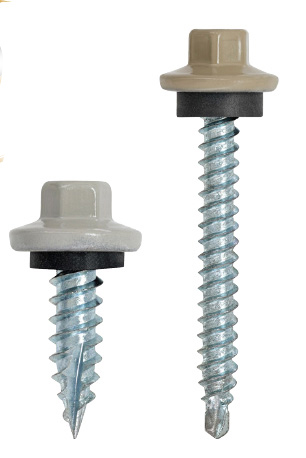
Graber Post Buildings reports a similar pattern. Its most popular fastener is a No. 10 painted metal-to-wood roofing screw with an EPDM sealing washer. According to the company, the screw is widely used for post-frame and residential metal roofing because it combines holding power with a weather-tight seal and a finished appearance. It is stocked in numerous colors to coordinate with the company’s steel panels.
“Our goal is to provide builders with a one-stop source for nearly every fastener needed to complete a project,” said Kenny Wagler, sales manager for Graber Post Buildings.
Wagler said the company’s selection includes wood-to-wood structural screws, metal-to-wood and metal-to-metal screws, stitch screws, pole barn nails, cordless framing nails, timber screws, structural connector screws, and concrete anchors.
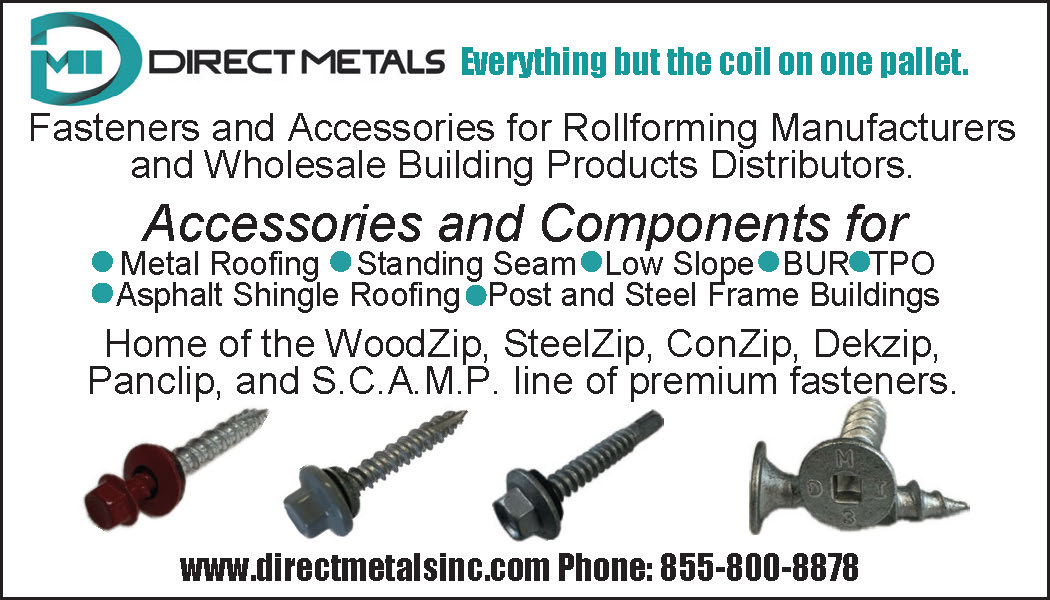
DMI Direct Metals’ most popular products reflect the growing use of standing seam metal roofing. The company’s PANCLIP family includes low-profile pancake- and wafer-head screws for metal-to-wood and metal-to-metal applications. When paired with standing seam panel clips, the screws provide an attachment system that allows the panels to conceal the fasteners.
“Standing seam metal roofing is prevalent in the state with growing market share in the rest of the country,” said David Quehl, director of sales and marketing for DMI Direct Metals, a Florida-based supplier.
Quehl said many PANCLIP products have Miami-Dade County listings and have passed corrosion-resistance testing intended for challenging coastal environments. He added that DMI supplies options for attachment to steel, wood, and concrete substrates.
Triangle Fastener Corporation’s best-selling product is CONCEALOR pancake head screws. Marty Martin, vice president of sales for Triangle Fastener Corporation, attributed its popularity to its versatility and use across multiple applications. The company’s BLAZER self-drilling screws are its second most popular offering.
He also said the company’s other product families include PANEL-TITE, TRACER, GET-A-GRIP, DEKFAST, DOMESTIC, and SD300. Together, the product lines provide options for wood-to-wood, steel-to-wood, and steel-to-steel applications.
Nails Fill Essential Roles
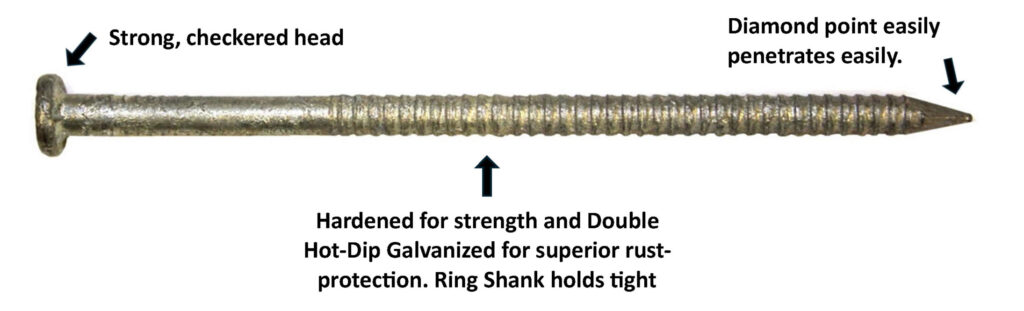
Although screws are widely used in metal roofing and post-frame construction, nails remain important for structural, roofing, siding, and restoration applications. Maze Nails’ best-selling product is its 4-inch TH4492A STORMGUARD Hot-Dipped Hardened Post Frame Nail. The nail is hardened to help prevent bending and breaking during installation. Its ring shank provides additional holding power, while its double hot-dipped galvanized coating protects it from corrosion. These characteristics are particularly important in buildings exposed to moisture and high winds.
“Builders rely on this nail because it offers strength, durability, and long-term performance,” said Lisa Martin, marketing director for Maze Nails.
She said the company’s second most popular product is the 1¼-inch R102A STORMGUARD Hot-Dipped Galvanized Ring Shank Roofing Nail. Its galvanized coating and ring shank make it suitable for roofing applications in which corrosion resistance and resistance to wind uplift are priorities.
She said Maze manufactures specialty nails from hot-dipped galvanized steel, stainless steel, aluminum, copper, and bright steel. Its products serve roofing, siding, decking, fencing, post-frame construction, restoration, trim, and masonry applications. Maze nails are used primarily for wood-to-wood connections and applications in which steel connectors, brackets, or other hardware are attached to wood.
Matching Protection to the Environment
Fastener corrosion can compromise appearance, holding strength, and the weather-tightness of the building envelope. Selecting an appropriate coating or fastener material is therefore as important as selecting the proper thread, point, and length.
Perz said Dynamic Fastener’s standard Dyna-Coat finish is an organic polymer coating designed to provide corrosion resistance while resisting marring, chipping, and abrasion. The coating is rated for 1,000 hours of salt-spray exposure. The company also offers zinc-plated fasteners.
O’Hara said Levi’s offers Magsho coating and long-life coating options associated with ASTM G85 salt-spray testing. He identified the development of coatings with improved corrosion resistance as one of the most important recent advances in roofing fasteners.
Marty Martin said Triangle offers TRI-SEAL, a three-layer corrosion-resistant coating composed of zinc, a chemical conversion layer, and a baked ceramic finish. According to Martin, the coating provides more than 1,000 hours of salt-spray resistance for exterior applications.
Quehl said DMI applies its DMG85 corrosion-resistant coating over zinc plating on most of its fasteners. The combination has passed Miami-Dade County corrosion testing for coastal environments. Other popular, long-life options include SCAMP 304 stainless-steel-cap fasteners and screws with zinc-aluminum alloy caps.
Lisa Martin said Maze’s signature STORMGUARD finish uses double hot-dipped galvanizing to provide long-term corrosion protection. Zinc-plated and cement-coated nails are also available for applications where those finishes are appropriate.
Wagler said Graber offers ZAMAC zinc-aluminum alloy, zinc plating with a chromate sealer, hot-dipped galvanizing, color-matched powder coatings, and stainless steel fasteners. This selection allows builders to choose protection based on the project’s environment and the materials being connected.
Coatings also contribute to a finished roof’s appearance. Trasatt said ST Fastening Systems offers powder-coated and wet-painted colored fasteners. Wagler said Graber stocks roofing screws in colors that match its metal panel offerings. Quehl said DMI uses powder coating as the standard color finish on metal-to-wood screws and expects to offer it on metal-to-metal screws as well. DMI also offers a wet-paint system to supplement its powder-coated products.
Matching the fastener to the panel involves more than selecting the closest color. The fastener material and coating must be compatible with the panel and appropriate for the moisture, salt, chemicals, and other contaminants it may encounter.
“The most important objective of any metal roofing fastener is to maintain weather-tightness of the roof system and not corrode,” Quehl said.
He advised architects and building owners to specify fasteners with corrosion protection that corresponds to the warranty and expected service life of the roof panels. Otherwise, the fasteners could deteriorate before the panels they are intended to secure.
Fasteners Designed for Longer Service
One prominent development in metal roofing fasteners is the use of molded alloy or stainless steel caps to protect the fastener head, an area vulnerable to corrosion. Trasatt said ST Fastening Systems developed the ZXL fastener with a molded zinc-aluminum alloy head and provides a 40-year warranty against red rust.
Wagler said the ZXL is Graber Post Buildings’ second most popular fastener and described it as a preferred option for premium metal roofing systems and other projects requiring long-term corrosion protection. It features a 5/16-inch cupped hex washer head with a molded ZAMAC zinc-aluminum alloy cap.
“The ZXL is an excellent choice for GALVALUME and other long-life metal roof panels, making it ideal for projects where both appearance and durability are priorities,” Wagler said.
Quehl said DMI’s second most popular fastener is its No. 12 SCAMP hex-washer-head fastener for exposed metal-to-wood roofing applications. The screw has a 304 stainless steel cap intended to protect the head from red rust. According to Quehl, the fastener’s corrosion warranty is designed to correspond with the panel warranty, and the SCAMP is Miami-Dade County listed for corrosion resistance in this application. A color-matched powder coating is available for painted roofs, providing the desired appearance while adding another layer of protection.
Fastener improvements have not been limited to heads and coatings. Manufacturers have continued to refine drill points for faster and more consistent installation into steel. EPDM sealing washers have also improved, providing longer-lasting protection around fastener penetrations. Better color-matching technology allows exposed fasteners to coordinate with contemporary metal panel finishes without sacrificing durability.
Lisa Martin noted that advances in manufacturing equipment have improved fastener consistency as well. She said Maze Nails has invested in a high-speed ENKOTEC nail machine that enables the company to manufacture roofing nails with tighter tolerances and greater quality control.
Another area of emphasis is performance during severe weather. Stronger codes and voluntary programs have increased attention to fastener corrosion resistance and wind uplift performance. Martin said Maze roofing nails have been approved for use under the FORTIFIED construction standard.
Beyond the Conventional Screw
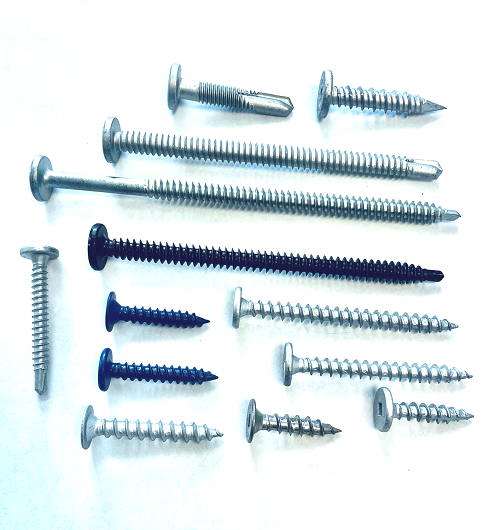
Marty Martin pointed to two Triangle innovations that address distinctly different roofing challenges. The BURR-BUSTER Stitch Screw has a patented point and thread design intended to minimize burrs and metal shavings during installation. Reducing metal debris can help prevent staining and localized panel corrosion. Its low-angle thread geometry is also designed to increase resistance to back-out and maintain a secure panel connection.
Martin also cited ISO-WELD, a system that uses induction-welding technology to attach TPO and PVC roofing membranes without penetrating the membrane itself. The technology reduces potential leak points while distributing attachment forces across the roof system. According to Martin, it can also improve installation speed and wind uplift resistance compared with traditional mechanically fastened membrane systems.
Quehl identified continuing improvements in corrosion-resistant coatings, long-life head designs, and powder-coated and wet-painted finishes as some of the most significant advances in roofing fasteners. While many of these technologies have developed over the past 15 to 20 years, ongoing refinements are helping fasteners keep pace with metal roof panels carrying long-term corrosion warranties.
O’Hara also pointed to the availability of both Type 17 and Mini-Driller points as an improvement that allows contractors to select a point suited to the substrate and fastening application.
Specialty Solutions for Existing Roofs
A supplier’s value becomes especially apparent when a contractor encounters a connection that cannot be completed with a standard roofing screw or nail. One common example is an aging exposed-fastener roof with screws or nails that have loosened, corroded, or backed out of the wood substrate.
Wagler said Graber Post offers the No. 14 T-17 WoodBinder as a “rescue screw.” It is designed to replace roofing nails or smaller screws that have loosened over time. The fastener’s larger bonded sealing washer covers the existing opening, including holes that have become elongated because of panel movement.
Its Type 17 point cleans the existing opening and allows oversized threads to engage sound wood around it. The EPDM rubber is vulcanized to the steel washer to prevent separation and maintain a seal, even if the fastener is installed at a slight angle. In the right application, the repair fastener can extend a metal roof’s service life without requiring panel replacement.
Quehl said DMI offers SCAMP 304 stainless-steel-cap replacement fasteners for both metal-to-wood and metal-to-metal applications. Because an existing hole may no longer hold the original fastener securely, a replacement fastener must generally have a larger diameter to engage the substrate and maintain the holding strength.
Quehl added that DMI supplies replacement options for original #12, #14, #17, #20 and #28 diameter screws. According to Quehl, all carry a lifetime warranty against red rust corrosion. This combination of larger diameters and protected heads addresses both the loss of holding strength and the corrosion or leakage that prompted the repair.
Other specialty products address less common construction needs. Perz said Dynamic Fastener offers bimetal fasteners, which provide an option for connections involving dissimilar materials such as aluminum and steel. Marty Martin said Triangle Fastener Corporation supplies unusually long fasteners, including products reaching as long as 18 inches. It also offers CONCEALOR-NB for nail-base applications where an ordinary fastener may not provide an effective solution.
O’Hara identified Levi’s No. 17 GoofGrip replacement screw and its EZGrip one-step fasteners as products for less-common needs. The GoofGrip provides an option for repairing stripped-out connections or replacing loosened screws in older metal roofing systems. The EZGrip line includes screws with wings intended to simplify particular installation conditions.
Lisa Martin said Maze continues to manufacture traditional cut masonry nails for concrete, brick, and mortar. Although these fasteners may not be used on many contemporary projects, they are valuable for restoration and historic preservation work where maintaining the character of an older structure matters.
Life-Long Connections
The breadth of available products demonstrates why fasteners should be selected as part of the building system rather than treated as interchangeable supplies. A fastener must penetrate the correct substrate, provide sufficient holding power, remain compatible with the materials around it, and resist the conditions it will encounter throughout the building’s service life.