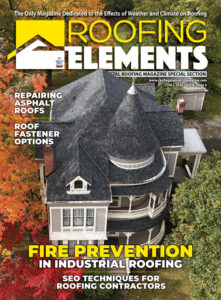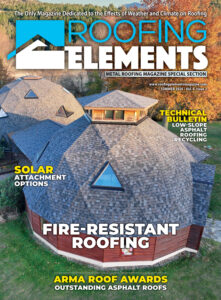
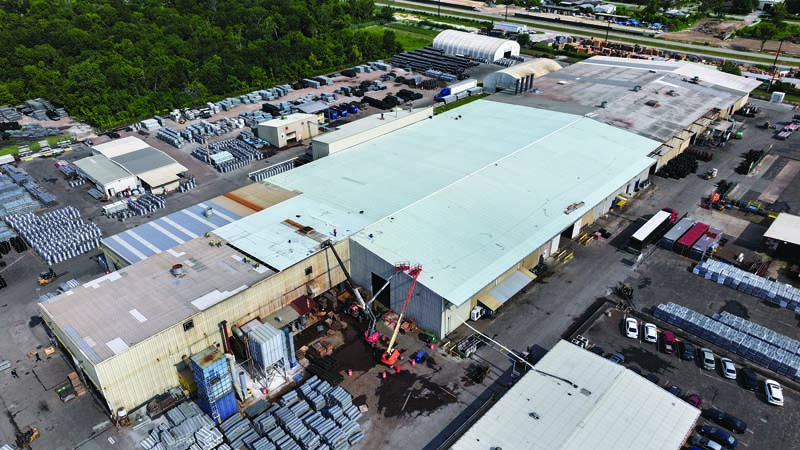
Originally Published as: Industrial Roofing: Performance and Safety
Aaron Barth, Sales Director at Enduro Composites, brings 15 years of experience across building construction, industrial infrastructure and highly corrosive environments. He has worked closely with owners, engineers, and contractors to develop practical solutions that improve facility performance, extend service life, and reduce maintenance costs.
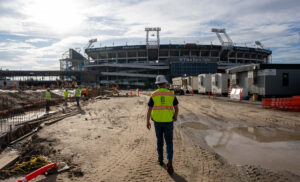
Fire is a major threat to industrial operations. NFPA research1 found that, in just one four-year period, United States industrial and manufacturing properties suffered $1.5 billion in direct property damage, plus significantly more in lost income. Fire mitigation practices and building materials are a natural focus for industrial facilities.
It’s also true that fire prevention and fire-retardant materials have come a long way. National and local building codes, modern materials and safety practices have combined to significantly improve fire protection. There are many fireproofing options2 now that didn’t exist even a dozen years ago, and most elements of a modern industrial building will have at least some fire retardancy, including roofs.
Roofing panels should be viewed as just one part of a modern fire-mitigation strategy. Roofing selected only for its fire propagation properties can mean further expenses down the line. The wiser long-term investment in your industrial facility is balancing fire performance with corrosion resistance, daylighting, durability, and lifecycle value.
Fire Propagation and Retardance
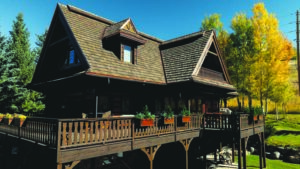
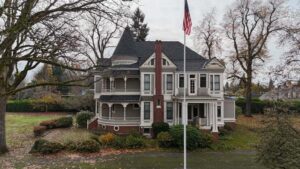
In a fire, metal roofing wins the day. Metal will grow dangerously hot, but its melting point is so high that there is a very low risk of dripping, molten metal during an industrial fire. Wood, by contrast, is “combustible” and will burn faster than other roofing materials. Chemical treatment can be added to provide greater fire resistance, but metal is the only truly noncombustible roofing option.
Composites perform between these two extremes in a fire. Fiber Reinforced Polymer (FRP) composites are commonly manufactured utilizing resins with self-extinguishing properties to meet ASTM E84 Flame Spread requirements. FRP can be manufactured to meet FSI of 25 or less, which means that, when the fire source is removed, the material will not continue to burn. Panels can be manufactured in a translucent color but using the same premium resins and additives to retain their self-extinguishing properties. Some manufacturers have earned FM 4880 and 4881 ratings for flame spread. FRP can also withstand higher temperatures without permanent deformation, often sparing the roof from repair or replacement after minor blazes.
Corrosion Resistance
Many industrial processes handle highly corrosive substances. For example, the galvanizing process3 releases hydrochloric or sulfuric acid fumes. The acidic mist is as corrosive to metal as the liquid HCl, rusting metal roofing in around five years. With enough rust damage, the affected panels must be replaced.
Corrosion resistance is the same reason many fertilizer facilities choose treated wood roofing and why industries with continuous wet conditions, like rendering, choose composites. FRP roofing inherently resists corrosion without additional treatment, giving it a much longer service life than metal—as much as 30 years—in high-corrosion environments.
Daylighting
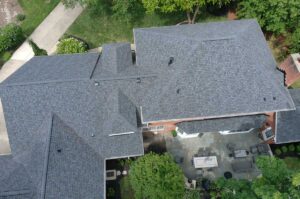
A less considered but important factor in industrial roofing is lighting. Metal and wood-and-shingle roofing is opaque, requiring a design that integrates sporadic windows and the use of facility-wide electric lighting.
Industrial spaces must be well-lit to ensure safety. Composite roofing panels can be manufactured in translucent colors without sacrificing strength or corrosion resistance. This allows for natural light to supplement artificial lighting. A Department of Defense study4 found that composite daylighting panels can reduce the kWh spent on electric lighting, improve the temperature within the building and ultimately increase worker productivity by “a quarter man-hour per day.”
Durability
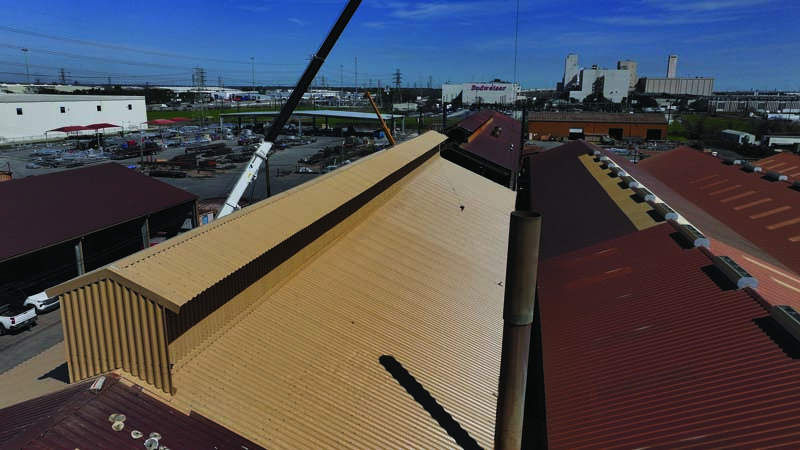
When maintenance or roof access is needed, some metal roofing is considered walkable. Workers must take care to avoid rusted, potentially weaker areas as well as skylights or sky lighting panels that may be installed to allow daylighting. A composite roof system can also be rated for foot traffic, even if comprised completely of translucent panels.
Engineered materials like FRP are just as strong in both translucent and opaque profiles. In addition to resisting corrosion, some composite panels are rated to withstand storms and impacts, they won’t conduct heat as much as metal, and they’re much lighter, decreasing risks during installation.
Composites, like metal, can also be used for purlins and girts, louvers, ridge vents, gutters and downspouts, in addition to internal structures like grating and handrails. A single-material solution delivers the material benefits to multiple parts of the building and helps keep the entire building on a predictable maintenance and replacement schedule.
Total Life Cycle Value Should Guide Roofing Decisions
Fireproofing is very important. Industrial operations can suffer immense losses due to fires and fire damage. But selecting a roof only based on fire performance may mean incurring losses in other areas of your business, from recurring maintenance to higher energy bills to lower employee satisfaction and productivity. Accounting for the total life cycle value of each roofing option during the selection process can mean fewer future surprises for industrial operations.
Sources:
- National Fire Protection Association (NFPA). “Fire in Industrial or Manufacturing Properties.” NFPA Research. https://www.nfpa.org/education-and-research/research/nfpa-research/fire-statistical-reports/fires-in-us-industrial-or-manufacturing-properties
- Fire & Safety Journal Americas. “Advancements in Fire-Resistant Materials.” https://fireandsafetyjournalamericas.com/advancements-in-fire-resistant-materials/
- Creative Composites Group. “TuffSpan® Roofing Panels Withstand Acidic Galvanizing Chemicals.” Creative Composites Group, Case Studies. https://www.creativecompositesgroup.com/case-studies/galvanizing-plant-tuffspan
- Demonstration of Three Corrosion-Resistant Sustainable Roofing Systems. https://bit.ly/4xzQaIA