
Disclaimer: The information contained in this article is for general educational information only. This information does not constitute legal advice, is not intended to constitute legal advice, nor should it be relied upon as legal advice for your specific factual pattern or situation.
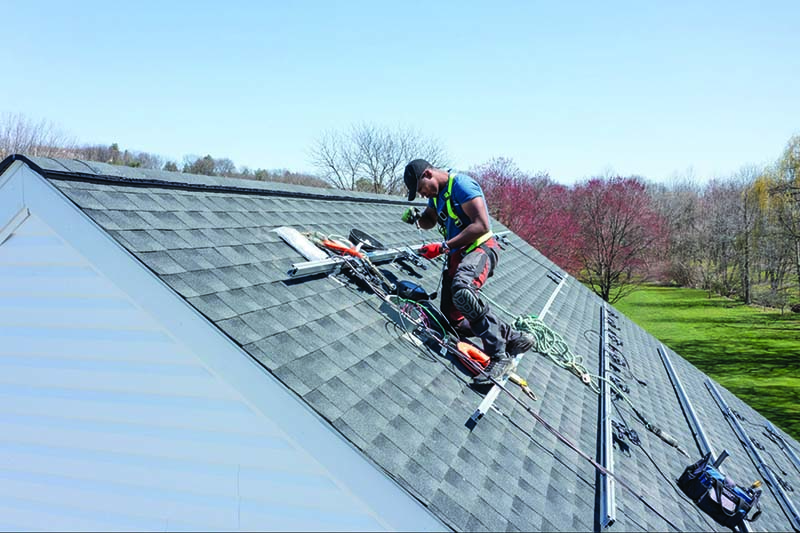
In early June 2025, major media outlets reported that the Department of Homeland Security issued internal directives instructing Immigration and Customs Enforcement (ICE) field offices to target approximately 3,000 arrests per day and to expand workplace operations in sanctuary jurisdictions, including major cities such as Chicago. Referred to by some media sources as “Operation Safeguard,” this enforcement push signals a return to large-scale worksite inspections across a range of industries, with construction remaining a primary focus. Roofing contractors whose crews may include U.S. citizens, lawful permanent residents, temporary visa-holders, and undocumented workers face significant disruption risks and potential legal exposure under this renewed enforcement strategy.
For roofing businesses, understanding what this heightened enforcement entails is the first step toward mitigating risk. DHS leadership has made it clear that enforcement will not be limited to border states or industries traditionally scrutinized. Local governments have already responded with public education campaigns to prepare residents and employers for intensified ICE activity. Contractors should assume that worksite visits could occur without warning and that preparation is essential to maintain compliance and minimize operational impact.
ICE generally uses two primary tools in its worksite enforcement activities. The first is a Notice of Inspection (NOI) or administrative subpoena, which compels an employer to produce Form I‑9 records within three business days under 8 C.F.R. § 274a.2(b)(2)(ii). The second is a site visit supported by a warrant. Determining whether a warrant is judicial (signed by a federal judge) or administrative (issued by DHS on Form I‑200 or I‑205) is critical. Administrative warrants authorize arrests but do not grant entry into non-public areas such as job trailers, break rooms, or roof decks without employer consent. Only a judicial warrant signed by a judge grants that authority.
Employees may decline to answer questions and need not provide documents absent a judicial warrant or another applicable legal requirement. Retaliating against workers for asserting these rights risks liability for unfair immigration-related employment practices under 8 U.S.C. § 1324b.
Proactive preparation is the most effective defense. Every roofing project should have a designated ICE coordinator, typically a superintendent, who is trained to meet agents, review and copy warrants, control access to restricted areas, and immediately contact legal counsel. Employers should maintain a secure, digitized I‑9 file system, separate from personnel records, to ensure quick, organized responses to NOIs. Posting signage that non-public areas require consent or a judicial warrant helps reinforce Fourth Amendment protections. All encounters should be documented, including the names and badge numbers of agents, time of arrival, and details of any search. Supervisors must also avoid on-the-spot document re-verification or selective terminations prompted solely by an ICE visit.
Risk management should also extend to contract language. Prime contractors can protect themselves from ICE-related delays by including enforcement-response provisions in subcontracts. These clauses should require subcontractors to follow comparable protocols, grant schedule extensions for enforcement-related work stoppages, and include mutual representations against knowingly employing unauthorized workers. Coupled with a well-drafted force majeure clause, these provisions help allocate risk without undermining customer relationships.
Supporting the workforce in a lawful and responsible way is equally important. Employers can provide bilingual “Know Your Rights” materials, allow flexible unpaid leave for immigration proceedings, and create confidential channels for employees to raise concerns. Transparent, consistent communication fosters trust, reduces fear-driven absenteeism, and promotes jobsite safety even during enforcement events.
The renewed focus on ICE worksite enforcement is already influencing operations across the roofing industry. Contractors who combine legal awareness with clear, practiced response plans and updated contractual protections will be best positioned to navigate this evolving environment. Being prepared not only protects the company from liability but also safeguards the workforce and keeps projects on track. Staying informed and proactive is no longer optional; it is a business necessity in the current regulatory climate.
Trent Cotney is a partner and Construction Team Leader at the law firm of Adams & Reese, LLP and NRCA General Counsel. You can reach him at 866.303.5868 or [email protected].