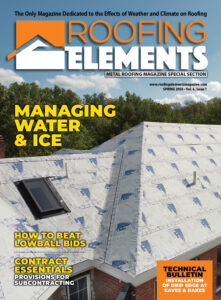
Originally Published as: Managing Water and Ice: How Underlayments, Snow Retention, and Sealants Work Together
Water has always been one of roofing’s primary adversaries, but ice and snow, specifically freezing and thawing, complicate the equation in ways that are not always intuitive. A roof that sheds rain effectively can still fail when water freezes, backs up, or is released all at once. For professional roofers the challenge is not just selecting quality individual components but understanding how those components interact under real-world conditions.
Self-adhering underlayments, snow guards or snow-retention bars, and sealants each play distinct roles in managing water and ice. Installed independently, they address specific vulnerabilities. Installed as part of a coordinated system, they provide layered protection that anticipates how snow melt water, snow, and ice behave throughout a winter season. Understanding that system-level interaction is what separates short-term performance from long-term reliability.
Beyond material selection and system design, professional roofers are responsible for ensuring assemblies meet applicable building codes and local requirements. Ice barrier placement, snow retention, ventilation, and drainage details are often governed by code, particularly in regions prone to snow and freeze–thaw cycling. These requirements establish minimum performance thresholds, but they also influence how components are combined in practice. Understanding both the code intent and the real-world behavior of water and ice allows roofers to move beyond compliance toward durable, well-integrated systems.
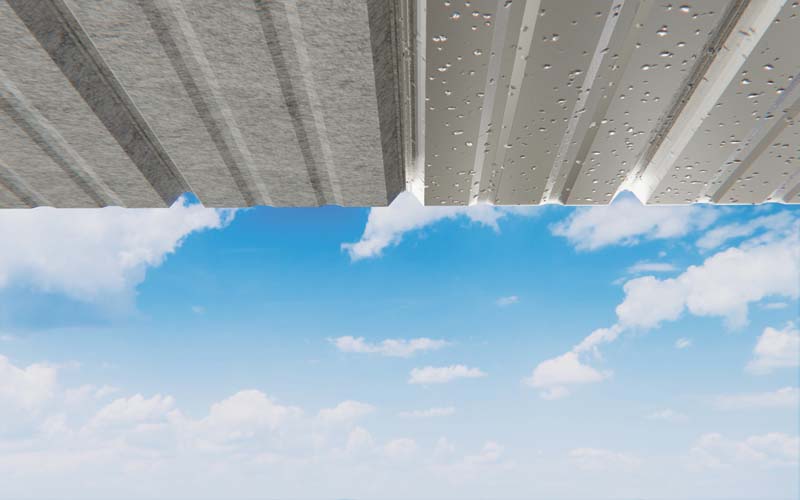
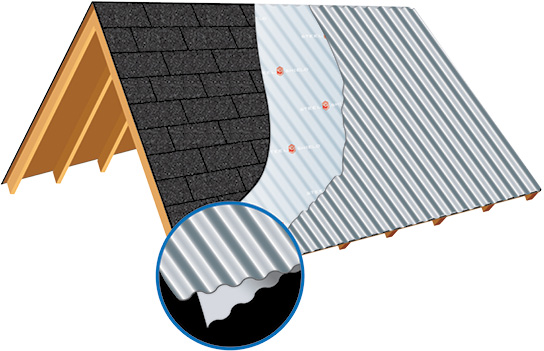
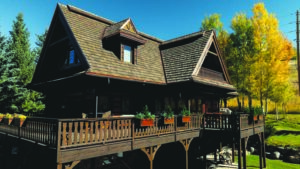
Photo courtesy of Dripstop.
The nature of water and ice on a roof
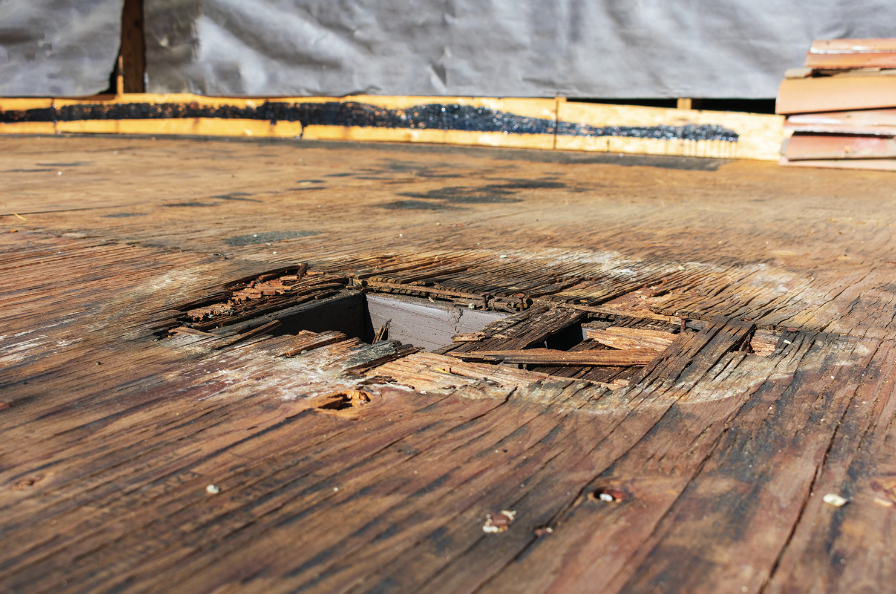
Roofs are engineered to shed water by gravity, but ice disrupts that fundamental activity. When snow accumulates, melts unevenly, refreezes, or releases suddenly, water is no longer moving predictably downslope. It can migrate laterally, move upslope, or sit in place for extended periods. These conditions can effectively call into play details of the roofing system that usually are not required to accomplish much.
Professional roofers tend to think in terms of failure modes rather than products. Ice dams, sliding snow, freeze-thaw cycling, wind-driven rain, and thermal movement all represent moments when the roof covering is no longer acting alone. Water and ice-handling components exist for mitigation and management of those moments.
Ventilation
Proper ventilation can be difficult to achieve. The theory is that cold air enters through eave vents and exits the ridge vents, minimizing trapped hot air that can precipitate a freeze-thaw cycle. However, ridge vents can become covered in snow, thereby losing the ability to properly ventilate. This is where attic insulation can help minimize heat loss into attic spaces.
Self-adhering Underlayments
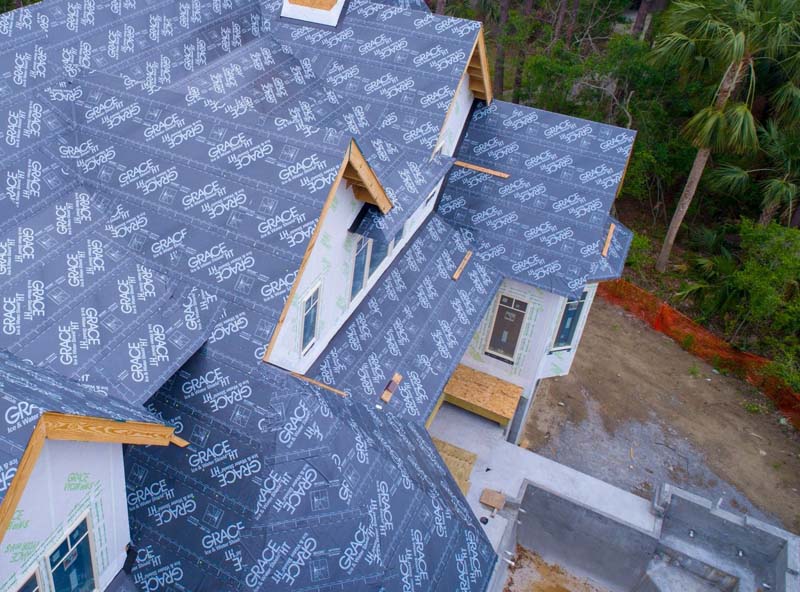
Self-adhering ice-and-water membranes are often misunderstood as a primary waterproofing layer. In practice, their value lies in what happens when the roof covering cannot do its job temporarily.
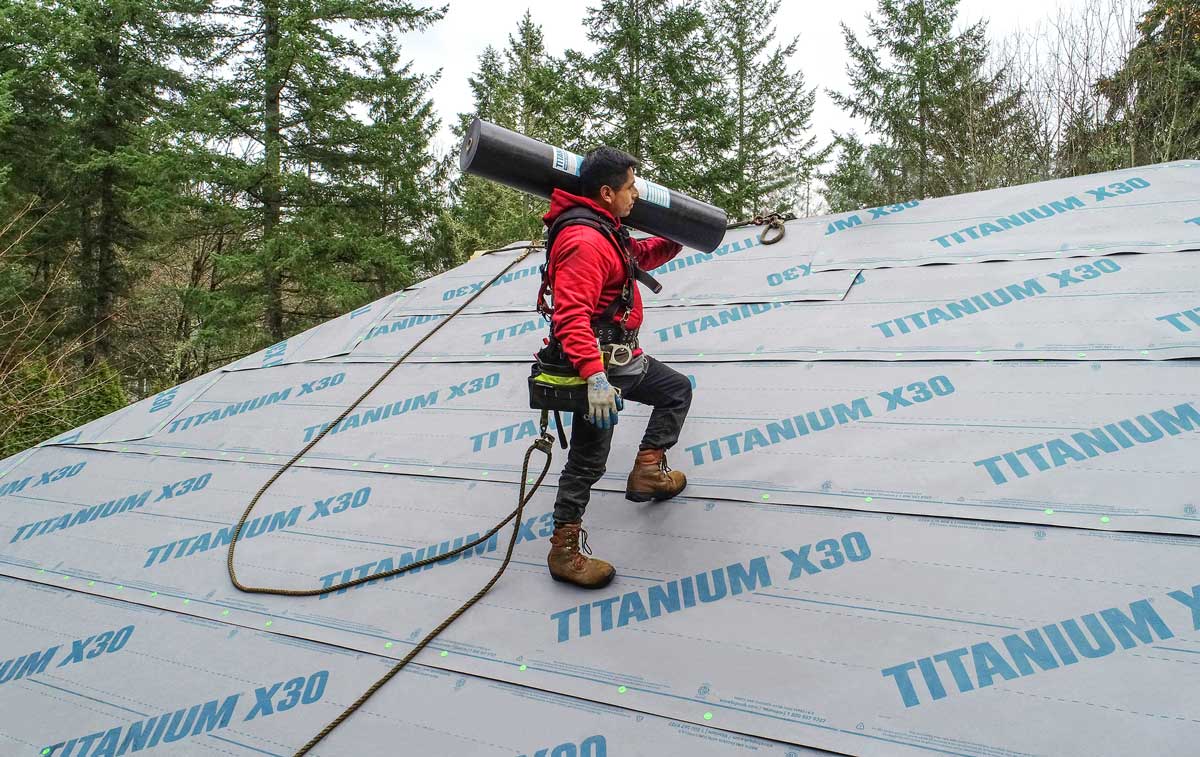
These membranes bond directly to the deck and seal around fasteners and penetrations. When meltwater backs up behind an ice dam or is driven upslope by wind, the membrane becomes the last line of defense protecting the structure below. For most roofers, the key questions are not whether to use self-adhering underlayment, but where and how much.
At eaves, valleys, rakes, dormers, chimneys, and transitions, water flow is complex even in mild conditions. Under ice loading, those areas are where problems surface first. Self-adhering membranes buy time, allowing water to sit or move slowly without immediately reaching the deck.
Overuse, however, can introduce its own issues. Fully adhered membranes across an entire roof can trap moisture in assemblies not designed for it, complicate tear-offs, and increase costs. Experienced roofers evaluate climate, roof geometry, ventilation, and covering type before deciding how extensively to deploy these membranes. Many find that it is best practice in high snow load regions to install ice and water shield membranes a minimum of 10 feet above a roof edge since ice dams do not always develop at the edge.
Metal Roofing Considerations
On non-metal roofs, self-adhering underlayments are typically viewed as localized protection. They supplement the water-shedding capacity of shingles, tile, or shakes at known weak points.
On metal roofs, underlayment selection is more nuanced. Metal panels expand and contract significantly with temperature changes, and some systems rely on the underlayment to serve as both a water barrier and a slip layer. Compatibility with panel movement, adhesive stability at temperature extremes, and interaction with panel coatings all matter.
In some metal roof assemblies, condensation control products such as factory-applied absorption products can reduce reliance on traditional underlayments by managing moisture at the panel level. These products absorb and temporarily hold condensation that forms on the underside of metal panels, releasing it gradually as conditions allow. These types of products help protect valuables inside the building from getting wet or destroyed as a result of rot, mildew, and mold. While condensation control does not waterproof the roof, it can change how moisture behaves within the roof system and should be considered when evaluating underlayment needs, ventilation, and overall moisture strategy.
Snow guards and snow-retention systems
Snow retention controls how snow moves on the roof and, more importantly, how it comes off the roof. On smooth surfaces, especially metal roofs, snowpack can release suddenly in large sheets, damaging property, endangering people, and stressing roof components.
Snow guards and snow bars introduce friction and segmentation. Instead of one catastrophic release, snow sheds gradually or remains in place long enough to melt. For roofers, the decision to include snow retention is driven by safety, liability, and roof geometry as much as by climate.
The most important factors in snow retention systems are how they are designed as well as how they are installed. Poor placement can concentrate snow in some areas and contribute to ice buildup at the eaves if it is cold enough to refreeze, or redirect meltwater into vulnerable areas. Properly designed systems distribute snow load across the structure and work in harmony with drainage paths.
The downstream effects of snow retention
When snow is retained, meltwater spends more time on the roof. That extended exposure increases reliance on underlayment and detailing. This is where system thinking becomes essential.
Retained snow often melts from the bottom up due to heat loss from the building. Water flows downslope until it reaches a cold eave, where it can refreeze and form ice dams. Snow retention can slow release but cannot eliminate this process. The roof must be prepared to manage it.
This raises practical questions:
• Is the underlayment designed to handle prolonged water exposure?
• Are eave details robust enough to tolerate freeze-thaw cycling?
• Has ventilation been considered as part of the overall strategy?
Snow retention is not a standalone solution. It shifts the behavior of snow and water, which must be accounted for elsewhere in the assembly.
Attachment methods and their implications
Snow retention systems are attached using a range of methods, including mechanical fasteners, clamps, and adhesives. Each has implications for waterproofing, movement, and long-term performance.
Mechanically fastened systems introduce penetrations that must be sealed reliably for decades. Clamp-on systems avoid penetrations but rely on panel geometry and coating compatibility. Adhesive systems eliminate fasteners but place significant demands on sealant performance under load and temperature extremes.
Roofers evaluate these methods not only for initial performance, but for inspectability and repairability. A system that cannot be serviced without disturbing the roof covering introduces long-term risk.
Sealants
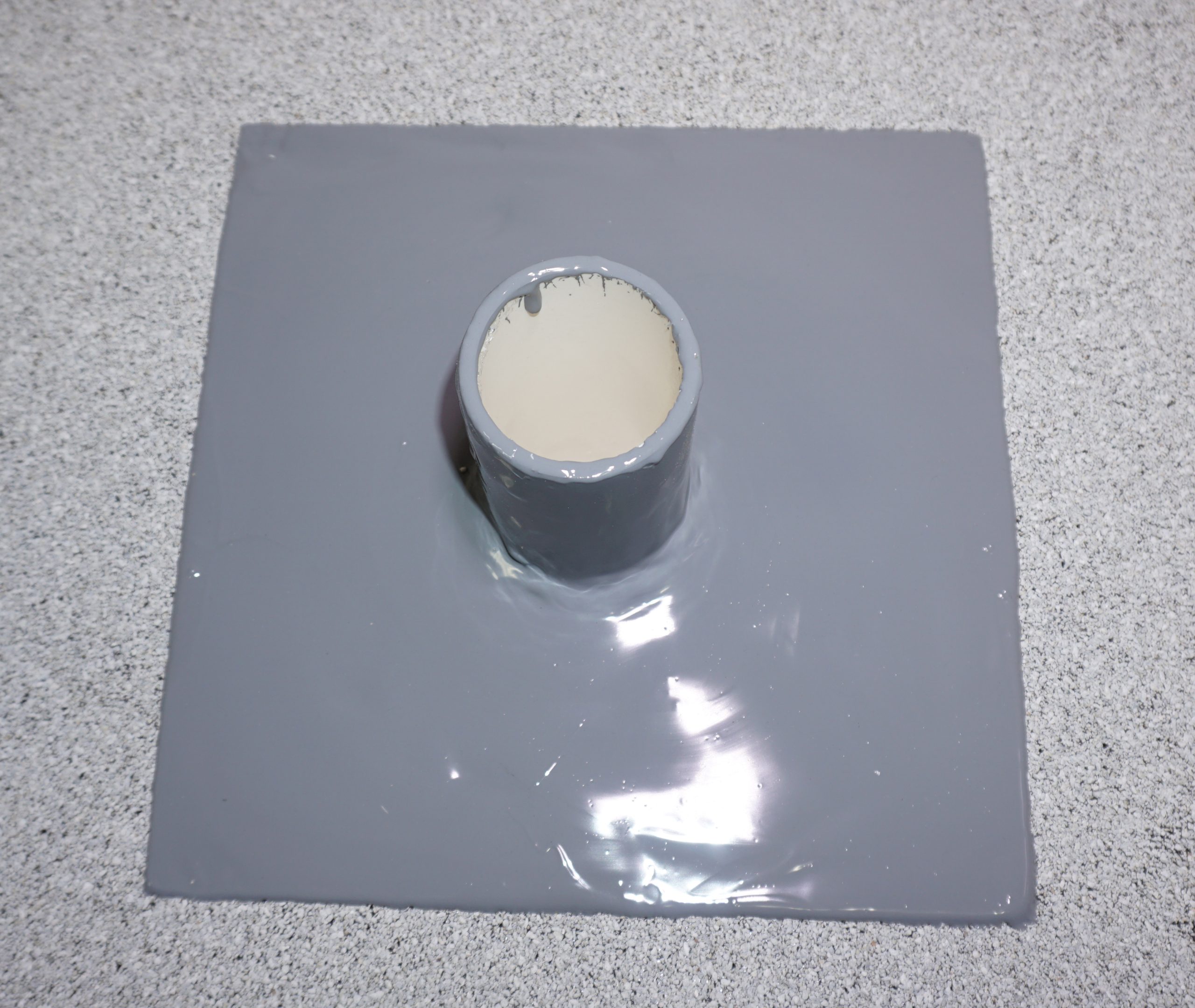
Sealants rarely get headline attention, but they are often the difference between a roof that performs and one that leaks. They are not designed to manage bulk water, but to close the small, critical pathways water exploits when movement, pressure, or ice is involved.
Roofers must be concerned about compatibility. A sealant that performs well on metal may fail on a membrane. One that adheres initially may degrade under UV exposure or lose elasticity in cold temperatures. Thermal movement, especially on metal roofs, places constant stress on sealant joints.
Sealants perform best when used to reinforce sound detailing rather than compensate for poor design. They are most effective as part of a layered approach, supporting mechanical attachments, flashing details, and membrane transitions.
Sealants in Ice and Water Management systems
When snow retention is added, sealants often play a supporting role at attachment points. These locations experience not only water exposure but mechanical stress from snow load and thermal movement. Sealant selection must account for all three.
Similarly, transitions between self-adhering underlayments and other materials rely on sealants to maintain continuity. Failure at these interfaces can undermine the protection the membrane is intended to provide.
It is prudent to be cautious about relying on a single product to do too much. Sealants are expected to seal, not to replace flashing, membranes, or structural design.
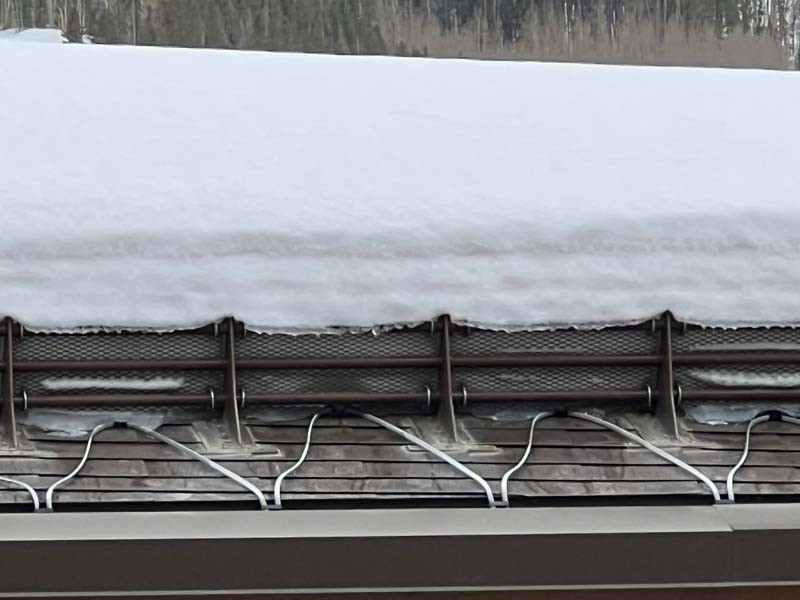
Self-Regulating Heat Trace Cable
The effectiveness of self-regulating heat trace cable is often overlooked or misunderstood. A principal strategy of all roof ice management systems is the ability to create proper melt paths to enable snow melt water from a roof to reach the ground. When snowmelt water (as a result of ambient temperatures, heat loss from a structure through the attic or exhaust vents) has the chance to re-freeze before it reaches the ground, this is a guaranteed recipe for roof ice problems developing on the roof, in the gutters, and in downspouts.
Self-regulating heat cable can resolve that problem anywhere on a roof where melting snow has the chance to re-freeze, principally roof edges and gutters and downspouts. For example, high on the roof dormers, snow melts and drips down. Where that snowmelt water lands, a heat trace cable can prevent that snow melt water from re-freezing. The path that gravity pulls that water down is precisely where self-regulating heat trace cable needs to be installed, although layout should also consider manufacturer guidelines, roof design, and local code requirements. The water eventually travels to the edge of the roof.
At the roof edge, if there are no conditions below that require controlled drainage, water may be allowed to shed directly to grade if permitted by code. However, where pedestrian areas, landscaping, or building components are present, gutters and downspouts are often necessary to direct water safely away from the structure.
Self-regulating heat trace cable installed in gutter troughs and threaded through downspouts creates a proper snow melt water path. The heated gutters will also prevent icicles.
Roof edges are typically where ice dams form. To prevent ice dams from developing on roof edges, install self-regulating heat cable in a zigzag pattern between a snow fence/bar and the roof edge. The snow fence/bar enables the heat trace cable to do its job (preventing ice dams) by keeping the roof area between the snow retention system and roof edge free of migrating snowpack and re-freezing snow melt water.
How the components work together
Viewed as a system, water and ice management relies on redundancy. Each component assumes that another may be temporarily overwhelmed.
Snow retention slows and controls snow movement, reducing sudden release and damage. That controlled behavior increases the duration of meltwater exposure. Self-adhering underlayments protect the deck during that extended exposure, particularly where water backs up or refreezes. Sealants close the gaps created by penetrations, attachments, and movement, preventing localized leaks from becoming systemic failures. Heat trace cable melts the snow and ice and sends it on its planned path off of the roof.
In metal roof systems where panel-applied condensation control products are used, moisture generated beneath the panels can be managed before it becomes bulk water. When properly coordinated with ventilation, underlayment placement, snow retention design, and sealant detailing, these products can reduce the moisture load the rest of the system must handle, improving overall resilience during freeze–thaw cycles.
Clarity on performance limits is important for every component. Installation temperature range and service temperature range of the underlayment along with long-term adhesion properties must be taken into consideration. When snow retention is added to the system, changing the course of snow and meltwater, underlayment performance becomes even more critical. Durability of sealants must be considered and ventilation must be adequate. If one element is missing or mismatched, the others are forced to perform beyond their intended role. Most premature failures trace back to that imbalance.
Common pitfalls
Experienced contractors watch for recurring mistakes that undermine otherwise good installations such as treating snow retention as a cosmetic add-on rather than a structural and water-management decision. Overreliance on ice-and-water membrane to compensate for poor drainage or ventilation is another common mistake.
Using incompatible sealants, ignoring thermal movement, or mixing products without considering long-term interaction also contribute to failures. These issues often do not appear immediately, which is why they are so damaging to reputations and warranties.
A system mindset for modern roofing
As roofers approach water and ice management as risk management rather than product selection, the focus shifts from how a component works in isolation to how it performs as part of an assembly exposed to weather, movement, and time.
When roofers understand how self-adhering underlayments, snow retention systems, and sealants function individually and together, they can design roofs that anticipate the unpredictable behavior of water and ice and remain resilient under the worst conditions.
System-level understanding is what turns accessories into assets and protects both the roof and the professional standing behind it.
Resources
- Ace Clamp, www.aceclamp.com
- Dripstop, www.dripstop.com
- Dynamic Fastener, www.dynamicfastener.com
- FloTrace, www.flotraceusa.com
- Levi’s Building Components, www.levisbuildingcomponents.com
- MFM Building Products, www.mfmbp.com
- Owens Corning, www.owenscorning.com
- Certainteed, www.certainteed.com