Every roofer across the country knows that one of the most pressing issues in our industry is the prevalence of lowball bids and scammers. Disreputable “roofers” artificially lower prices to win jobs, then do shoddy work or, in some cases, don’t do the work at all. These lowball bidders and scammers are a black eye on our industry’s reputation, as affected consumers grow to distrust roofing contractors.
Fixing this issue remains a top concern for roofing contractors, along with the state of the economy, the cost of materials, and the cost of labor. Lowball bids put reputable contractors in a position where they can’t compete on cost, which in turn hurts the customer because the work can’t be done without cutting corners. Every honest person in the industry is put in a bad position, with the only beneficiary being the lowball bidder. However, reputable roofing contractors can take a proactive approach and win a customer’s business without stooping to their level. Here are a few tips to beat lowball bids and scammers without devaluing your own work and reputation.
Don’t badmouth low-ball bids
Every roofer knows when they are being lowballed. You know what prices are realistic and which are not. However, the customer does not have the same knowledge and is often more than willing to hire the lowest bidder. The first instinct of many roofing contractors is to tell the homeowner they are being scammed or that it is impossible to do a job at that price point. Don’t do this. You can be 100 percent correct, but you can’t argue and badmouth the lowball bid. When it gets to that point, you have already lost. You are trying to save the customer from a bad deal, but to them, you just look like a sore loser. You have to show why your work is good, not why the cheaper bid is bad.
Educate by selling a process over selling a roof
Lowball bidders thrive when they can avoid the details. This means writing contracts that are vague and using only simple sentences. The contract might state, “I agree to tear off and replace shingles,” a phrase that can mean wildly different things to different roofers. Using this vague language allows a shady roofer to get the client to agree to a job without explaining the process. When the conversation is just about selling a roof, it is difficult for a reputable roofer to beat out a lower bid. However, if you are selling a process, you can demonstrate your value without undermining it.
Details matter to people, and your estimate process and the details you include in your contract are a great opportunity to educate potential customers about what an ethical process looks like.
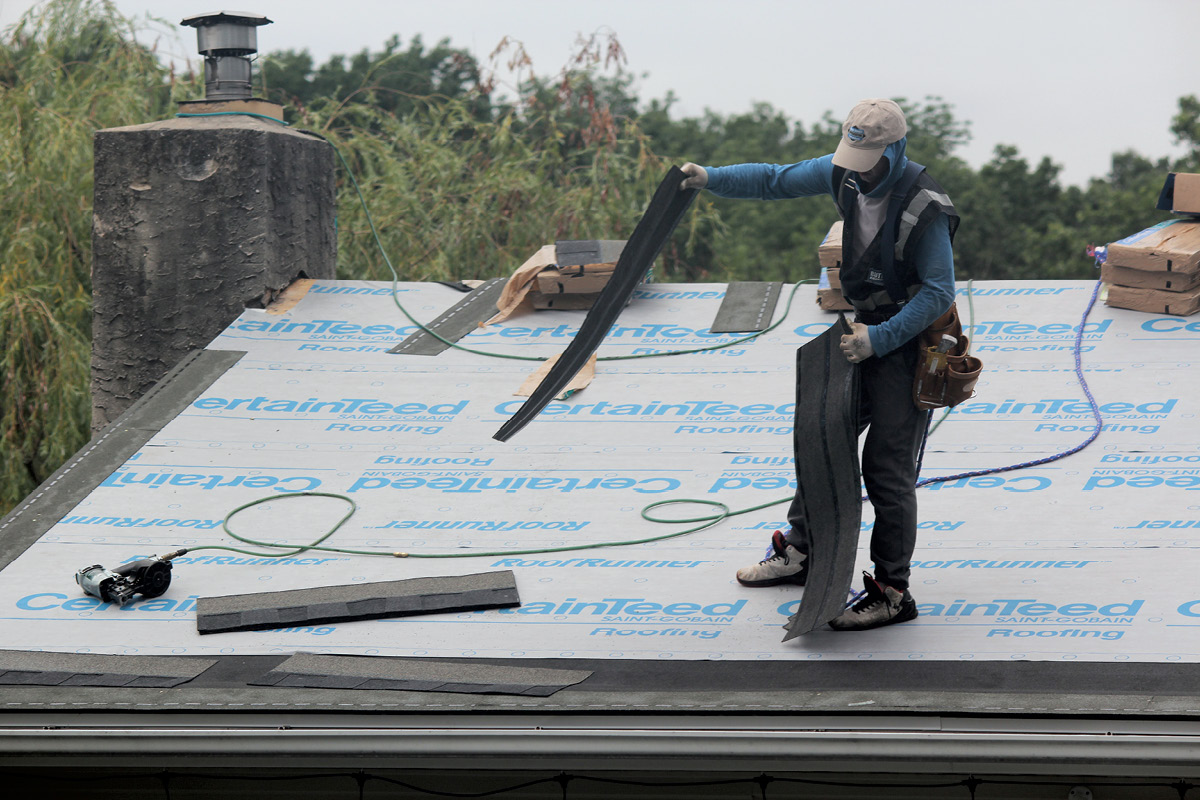
A detailed scope explains your entire process, from tear-off and disposal to how landscaping is protected, the underlayment you are using, and what happens at valleys, chimneys, walls, and penetrations. It explains the entire process in detail from start to finish. Details make cheap bids harder to sell because they give the customer something to compare “cheap” to.
Showing the customer a detailed contract educates them about what to look for. This means that when a low-ball bidder writes a simple contract that says, “You will pay me $7,000 to do your roof,” the customer will know something is up.
Show customers how to vet you
The best way to help customers avoid lowball bids and scams is to give them the tools to vet the roofers they are considering hiring. Again, you never want to try to argue a customer out of a lower bid; however, you can give them the ability to spot a shady contractor by teaching them how to vet your own roofing company.
During the estimation process, you can show the customer your online reviews, examples of your company handling negative reviews, and your license information on your State’s regulatory body for contractors. This helps you build trust with the customer by showing your history of good service and the absence of marks on your license. Importantly, it also shows them how to identify the most common signs of a shady contractor. Sketchy reviews, no license, or a history of negative marks on your license are strong signs of a shady contractor. Give the customer the tools to vet future contractors by teaching them to vet your roofing company.
Teach customers to compare warranties
Warranties are an important part of any roofing job, and showing the warranties your roofing company offers is a great way to reassure a client that they are working with an honest roofer. You don’t just want to show them your personal warranty; you also want to show them the manufacturer’s warranties.
Manufacturers often provide a list of certified and verified contractors they trust to install their products. Showing a customer that your company is on one of those lists is a great way to demonstrate that you do high-quality work while also giving them a tool to vet their next contractor. As a manufacturer-certified contractor, you may also be able to offer an extended or upgraded warranty, providing the customer with another layer of protection. Teaching the customer how to vet manufacturer warranties is a great way to help them spot scammers or low-ball bidders who often don’t have them.
Proof over promise
Scams and lowball bids flourish in confusing environments, which is why you need to build trust with the customer more quickly than a scam competitor can sow confusion. This means showing up with a clear, consistent order of events. Inspection, findings, options, written scope of work, start and completion schedule, and finally, warranty details. Avoiding confusion means offering proof of work, not just a promise. Show customers real photos of your work, and show them your insurance certificates, licensing, manufacturer certifications, and bonding. Give them actual references they can contact. If you use subcontractors, say so and explain your quality control process. Let them speak to your supervisors and have them explain the accountability process for your team. These are all steps a scammer won’t take. Be the example of an honest roofer they can take from every interaction from here on out. Doing this will ensure lowball bidders and scammers don’t have a leg up.
The best way for roofers to beat lowball bidders and scammers trying to ruin our industry is to educate prospective clients through example. You have to do more than simply tell them the lowest bid is too good to be true. Teach homeowners about the red flags by highlighting your process as a green flag. Sell that process, not just a simple roof repair or replacement. When you do this, you position yourself as more than a bidder, but a roofing advisor. Customers will appreciate this clarity and search for roofers like yourself.
You don’t beat lowball bids by telling customers how bad they are. You beat them by showing customers how great you are. You beat them by making your process visible and the risk understandable. Cheap roofs are sold with cheap promises. Great roofs are sold with proof and clarity.
Tyler Johnson is the owner of Johnson Roofing in Mesa, Arizona (https://johnsonroofingaz.com/). The roofing company has been assisting Arizona homeowners with their roofing repair needs since 2004.